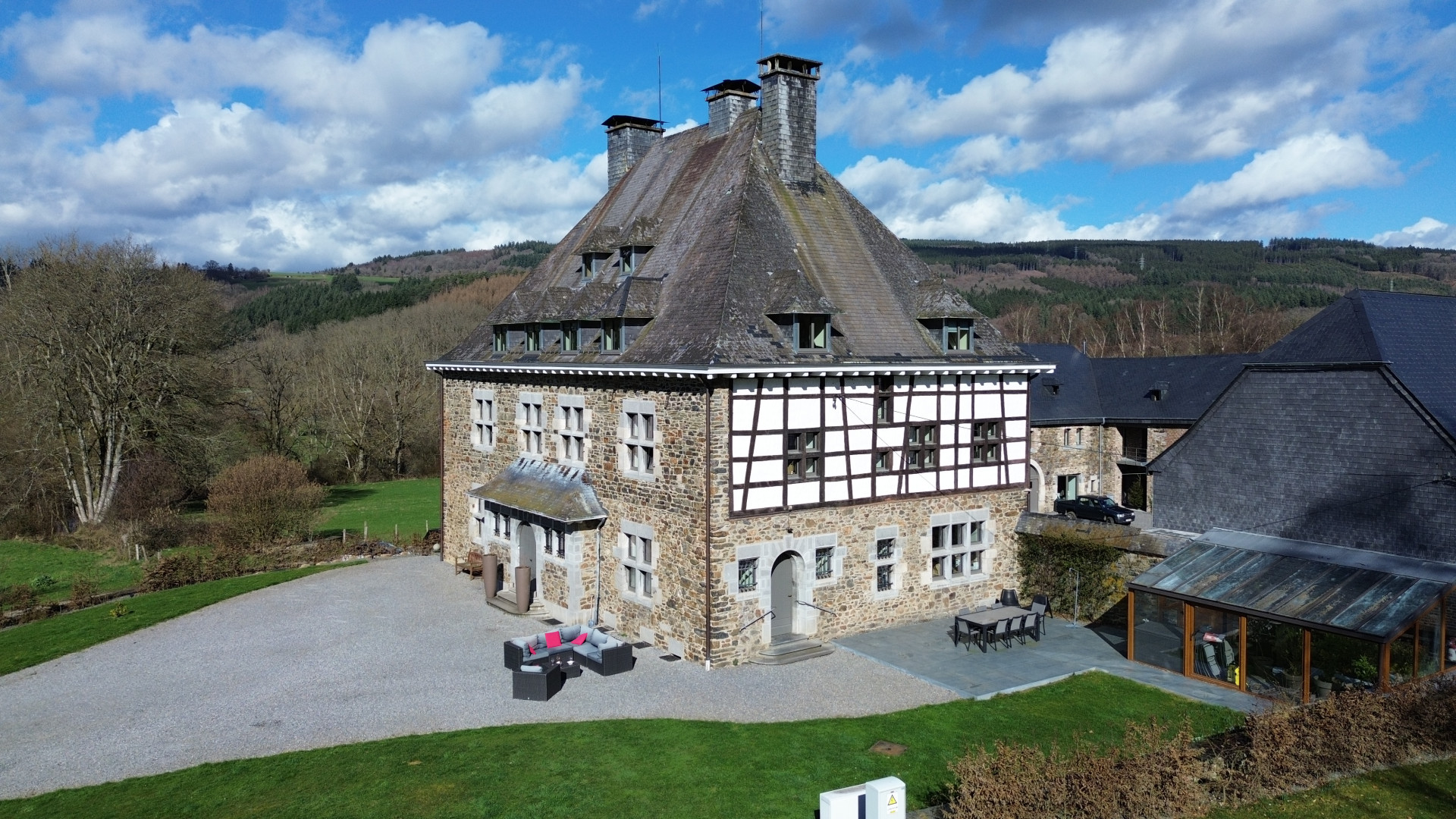
Between 1343 and 1778, the history of La Vaulx-Renard is deeply rooted in the region. In 1343, Renard, a member of the seigneurial family of Waimes and uncle of the builder of Reinhardstein Castle, settled in the region. As hereditary mayor of the ban of Roanne, he was the founder of the original estate. At that time, he abandoned the family name "de Waimes" in favor of "del Vaulx" or "de La Vaulx". The first names Renard, carried by an uncle and his nephew, would give their name to the two constructions, La Vaulx and Reinhardstein. In the 16th century, the name "Vaulx-Renard" appeared in memory of the founder of the fief.
From 1343 to 1762, the estate, then under the authority of the Abbey of Stavelot, was passed down from generation to generation. In 1760, Antoine-Joseph inherited the estate, becoming the last of his lineage. However, the financial situation was disastrous. In 1761, Antoine-Joseph ceded the estate to the Chapter of Stavelot, while retaining the title of hereditary mayor and receiving an annual life annuity. His enjoyment was however short-lived, as he died the following year, at the age of 45.
Protests arose regarding the cession of the estate to "mortmain", the monks and serfs, in contradiction with ancient laws. Despite this, the estate was taken over by the Benedictine monks and became a popular rest residence, as well as a renowned hunting ground.
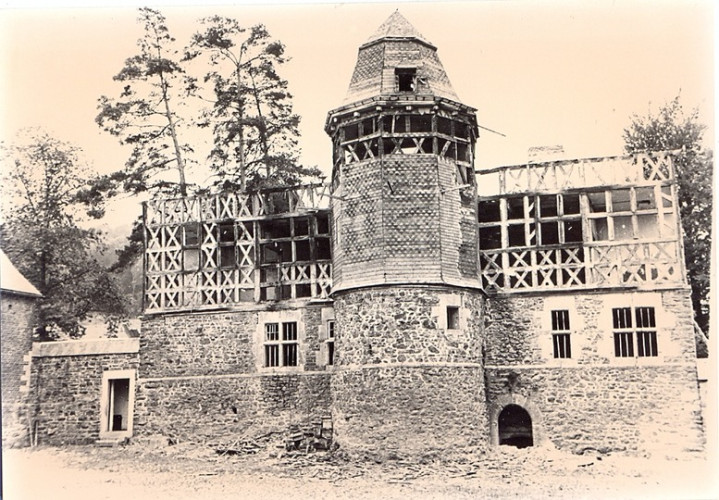
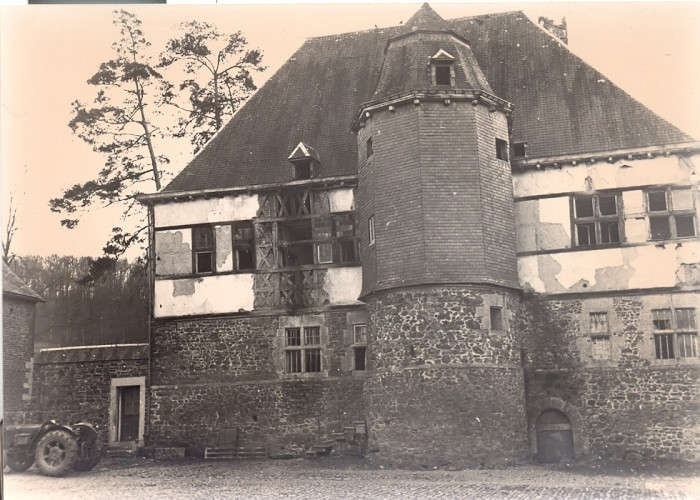
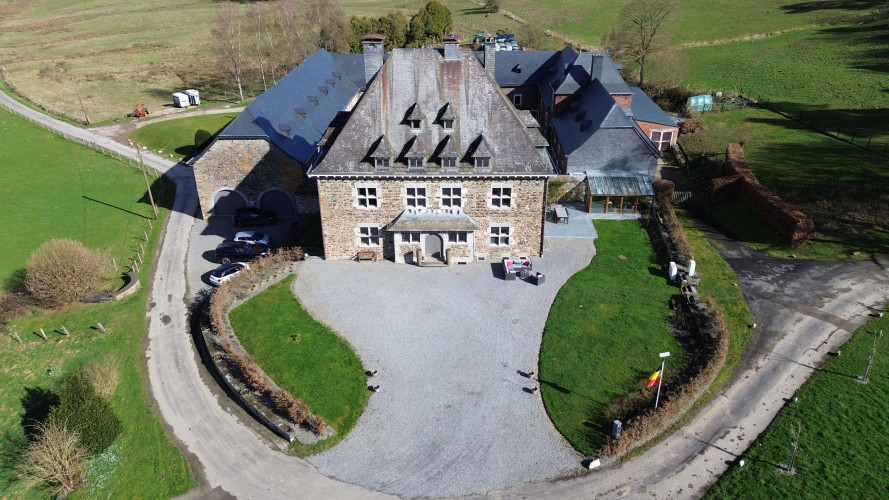
From 1778, the monks undertook the construction of the current building: a vast quadrilateral composed of three sides of agricultural buildings, the castle forming the fourth side. Two wrought iron weather vanes – one authentic and one replica – adorned with the wolf, emblem of the Abbey of Stavelot, mark the completion of the works in 1779. The French Revolution then put an end to the activities of the monks and all religious congregations, marking the end of the Ancien Régime.
The castle and the farm were then about to be sold as "national property". However, claims concerning the monks' property rights over La Vaulx-Renard were finally taken into consideration, and the fief returned to several collateral heirs.
The farm was operated from 1793 by farmer Lambert Delvenne. Subsequently, Clément Simonis from Verviers became the owner before selling the estate in 1835 to Lambert Grisard. Upon his death in 1862, he bequeathed it to his nephew Edouard Wauters. The inheritance then passed to his sister Marie de Terwangne, née Wauters, then in 1913 to the couple Charles de Harenne and Marcienne Colin-Wauters, great-grandparents of Damien Goffinet.
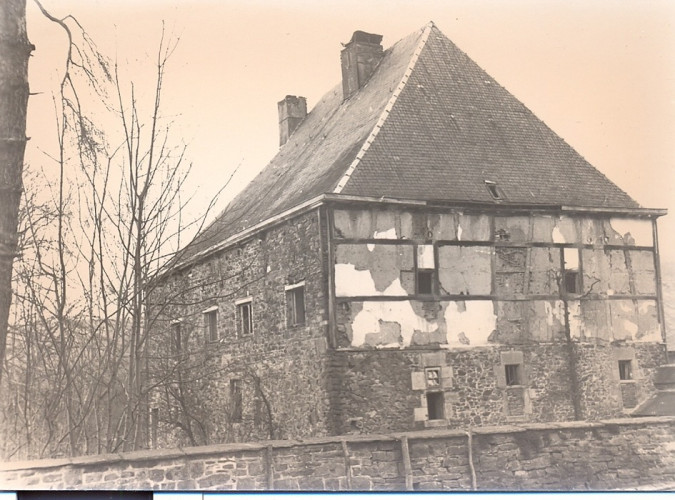
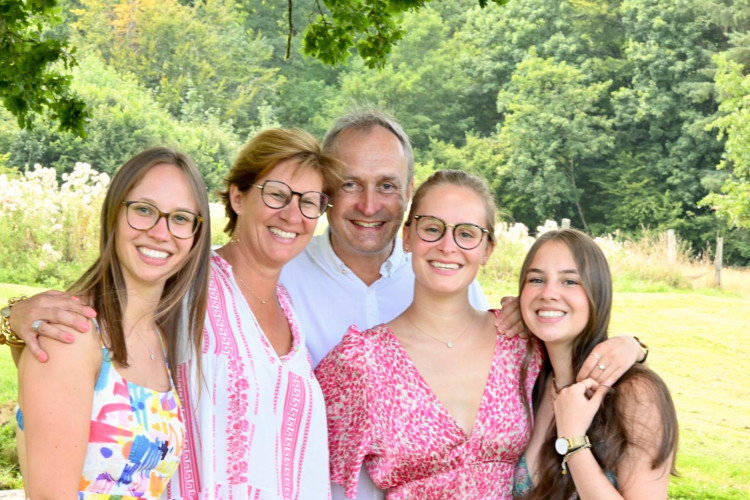
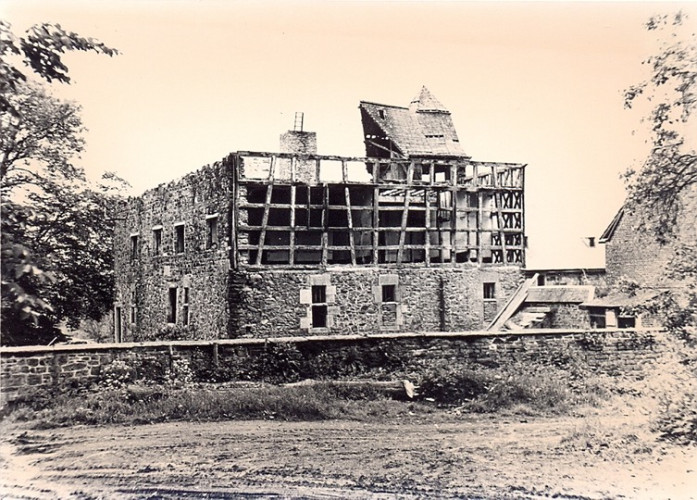
In 1955-1956, the castle was completely restored to serve as a family residence. In 2022, a project for guest rooms emerged. Renovation works began under the supervision of Damien Goffinet and his wife Sophie Bronne. And it is they who welcome you today to this place filled with history and stories.
Passed down from generation to generation, it has always been a place of life, laughter and reunions.
At the age of 50, we decided to change our lives and take over this family home, to breathe new life into it.
Together with our three daughters, we are continuing its story with heart, sincerity and authenticity.
Here, we love to welcome you, share with you and take care of every detail so that you feel at home.
You are not just visitors... You are at home!